Mérida Flowerpiercer
NameMérida Flowerpiercer
Common NameMérida Flowerpiercer
Scientific NameDiglossa gloriosa
FamilyThraupidae
Wingspan (cm)18
Length (cm)14
Weight (g)13
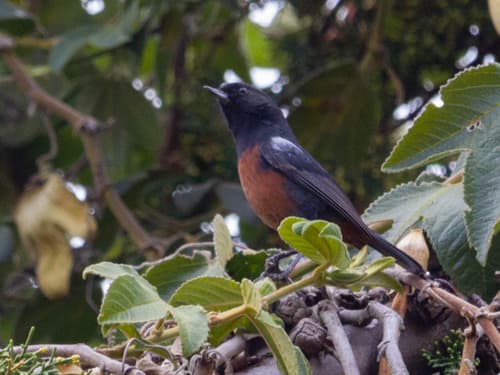
Plumage DetailsAdults have a glossy black head, back, and wings, contrasting sharply with a rich rufous-chestnut belly and flanks. A distinctive white patch is present on the shoulder (carpal joint). The bill is slender, upturned, and hooked at the tip.
Vocalization / CallIts vocalizations include a high-pitched, thin 'tsee' or 'tsit' call, often given singly or in short series. The song is a simple, repetitive series of high-pitched notes.
Primary Dietnectarivore
Primary Habitatsforest, mountain
Conservation Statusleast-concern
Geographic RangeEndemic to the Andes of western Venezuela, specifically in the Mérida state, where it inhabits humid montane forests and elfin forest edges at elevations typically between 2,500 and 3,600 meters.
Identifying FeaturesGlossy black upperparts, Rufous-chestnut underparts, White shoulder patch, Upturned, hooked bill, Found in high-altitude Venezuelan Andes
Description
The Mérida Flowerpiercer is a small, striking tanager found in high-altitude Andean forests. It is known for its specialized bill, which it uses to pierce the base of flowers to extract nectar. This active bird forages among flowering shrubs and trees.