Lyre-tailed Nightjar
NameLyre-tailed Nightjar
Common NameLyre-tailed Nightjar
Scientific NameUropsalis lyra
FamilyCaprimulgidae
Wingspan (cm)55
Length (cm)80
Weight (g)60
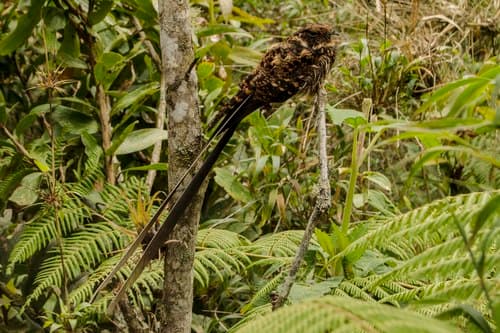
Plumage DetailsCryptic brown, rufous, and black mottling and streaking across the body, providing excellent camouflage against tree bark and forest floor. Males have extremely elongated, stiff, dark outer tail feathers that can reach up to 70 cm, curving outwards to resemble a lyre. Females have shorter, less elaborate tails.
Vocalization / CallA distinctive, often repeated, high-pitched 'pweee-pweee-pweee' or 'tseee-tseee-tseee' call, sometimes described as a mournful whistle or a series of rising notes.
Primary Dietinsectivore
Primary Habitatsforest, mountain
Conservation Statusleast-concern
Geographic RangeFound in the Andes mountains of South America, from Venezuela south through Colombia, Ecuador, Peru, and Bolivia, typically inhabiting montane cloud forests and humid evergreen forests.
Identifying Featuresextremely long, lyre-shaped tail feathers (males), cryptic mottled brown plumage, nocturnal habits, large eyes, short bill with wide gape
Description
This nocturnal bird is known for its superb camouflage, blending seamlessly with tree bark and leaf litter. Males possess extraordinarily long, lyre-shaped outer tail feathers, which are a striking feature during flight and display. They are typically found perched vertically during the day, relying on their cryptic plumage for concealment.