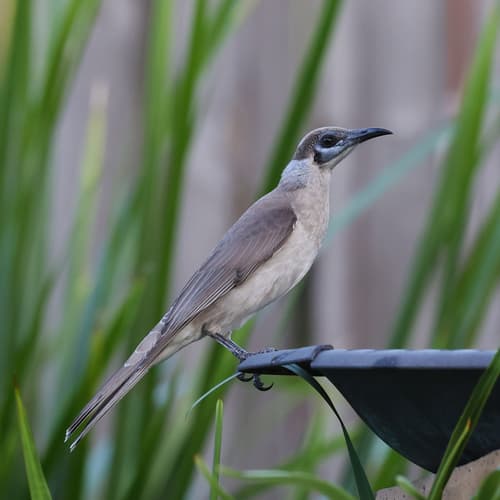
Little Friarbird
NameLittle Friarbird
Common NameLittle Friarbird
Scientific NamePhilemon citreogularis
FamilyMeliphagidae
Wingspan (cm)37.5
Length (cm)27.5
Weight (g)60
Plumage DetailsOverall dull grey-brown plumage, paler on the underparts. It features a prominent bare, dark grey to blackish patch of skin around the eye and extending towards the base of the bill. The bill itself is long, slender, decurved, and entirely black.
Vocalization / CallKnown for its loud, clear, and often repetitive calls, which can be described as 'chock-chock', 'squawk', or 'wark'. It is a vocal species, especially when in groups or defending feeding territories.
Primary Dietomnivore
Primary Habitatsforest, urban
Conservation Statusleast-concern
Geographic RangeWidespread across northern and eastern Australia, extending into southern New Guinea. It inhabits open woodlands, forests, and is commonly found in urban parks and gardens.
Identifying Featuresbare blackish facial patch, long decurved black bill, dull grey-brown plumage, lack of prominent knob on bill
Description
The Little Friarbird is a medium-sized honeyeater characterized by its dull grey-brown plumage, a distinctive bare blackish facial patch, and a long, decurved black bill. It is an active and often noisy bird, frequently observed foraging for nectar and insects in the canopy of trees and shrubs.