Lesser Yellowlegs
NameLesser Yellowlegs
Common NameLesser Yellowlegs
Scientific NameTringa flavipes
FamilyScolopacidae
Wingspan (cm)61.5
Length (cm)25
Weight (g)83.5
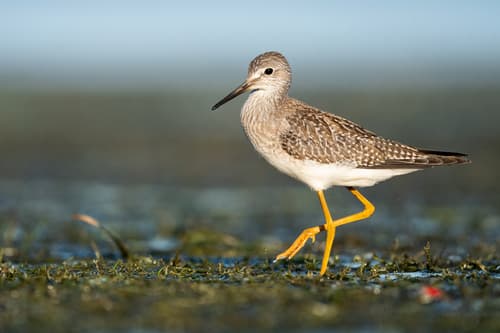
Plumage DetailsAdults have streaky gray-brown upperparts, a white belly, and finely streaked flanks. The head and neck are also streaked, and there is a faint white supercilium. In breeding plumage, the upperparts show more distinct spotting and barring.
Vocalization / CallIts call is a distinctive, clear, two-note 'tu-tu' or 'cu-cu', often repeated, which is higher pitched and less ringing than that of the Greater Yellowlegs.
Primary Dietinsectivore
Primary Habitatswetland, coastal
Conservation Statusleast-concern
Geographic RangeBreeds across the boreal forests and tundra of Alaska and Canada. Migrates through much of North America, Central America, and the Caribbean, wintering primarily in coastal and inland wetlands of the southern United States, Mexico, Central America, and South America.
Identifying FeaturesLong, bright yellow legs, Slender, straight black bill (shorter than head length), Medium size (smaller than Greater Yellowlegs), Streaky gray-brown upperparts and white underparts, Distinctive two-note call
Description
The Lesser Yellowlegs is a medium-sized shorebird characterized by its long, bright yellow legs and a relatively slender, straight black bill. It is often seen wading in shallow water, actively pecking at the surface or probing in the mud for food.