Kākāpō
NameKākāpō
Common NameKākāpō
Scientific NameStrigops habroptilus
FamilyStrigopidae
Wingspan (cm)60
Length (cm)60
Weight (g)2500
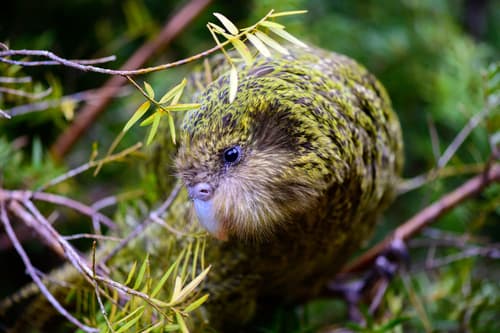
Plumage DetailsThe plumage is predominantly moss-green with blackish-brown mottling and streaks on the back, wings, and head, providing excellent camouflage in its forest habitat. The underside is paler, yellowish-green, and the feathers are soft and fine.
Vocalization / CallKākāpō vocalizations include a loud, low-frequency 'boom' call made by males during breeding season to attract mates, which can travel for kilometers. They also produce a high-pitched 'ching' call, growls, and shrieks.
Primary Dietfrugivore
Primary Habitatsforest
Conservation Statuscritically-endangered
Geographic RangeEndemic to New Zealand, the Kākāpō is currently restricted to several predator-free offshore islands (e.g., Whenua Hou/Codfish Island, Anchor Island) as part of intensive conservation efforts. Historically, it was found throughout New Zealand's native forests.
Identifying FeaturesLarge, flightless, nocturnal parrot, Moss-green plumage with black mottling, Owl-like facial disc with prominent whiskers (vibrissae), Strong legs and feet for walking and climbing, Distinctive musty odor
Description
The Kākāpō is a large, nocturnal, flightless parrot endemic to New Zealand, known for its distinctive moss-green plumage and owl-like facial disc. It is the world's only flightless parrot and the heaviest parrot species, spending its life foraging on the forest floor.