Ivory Gull
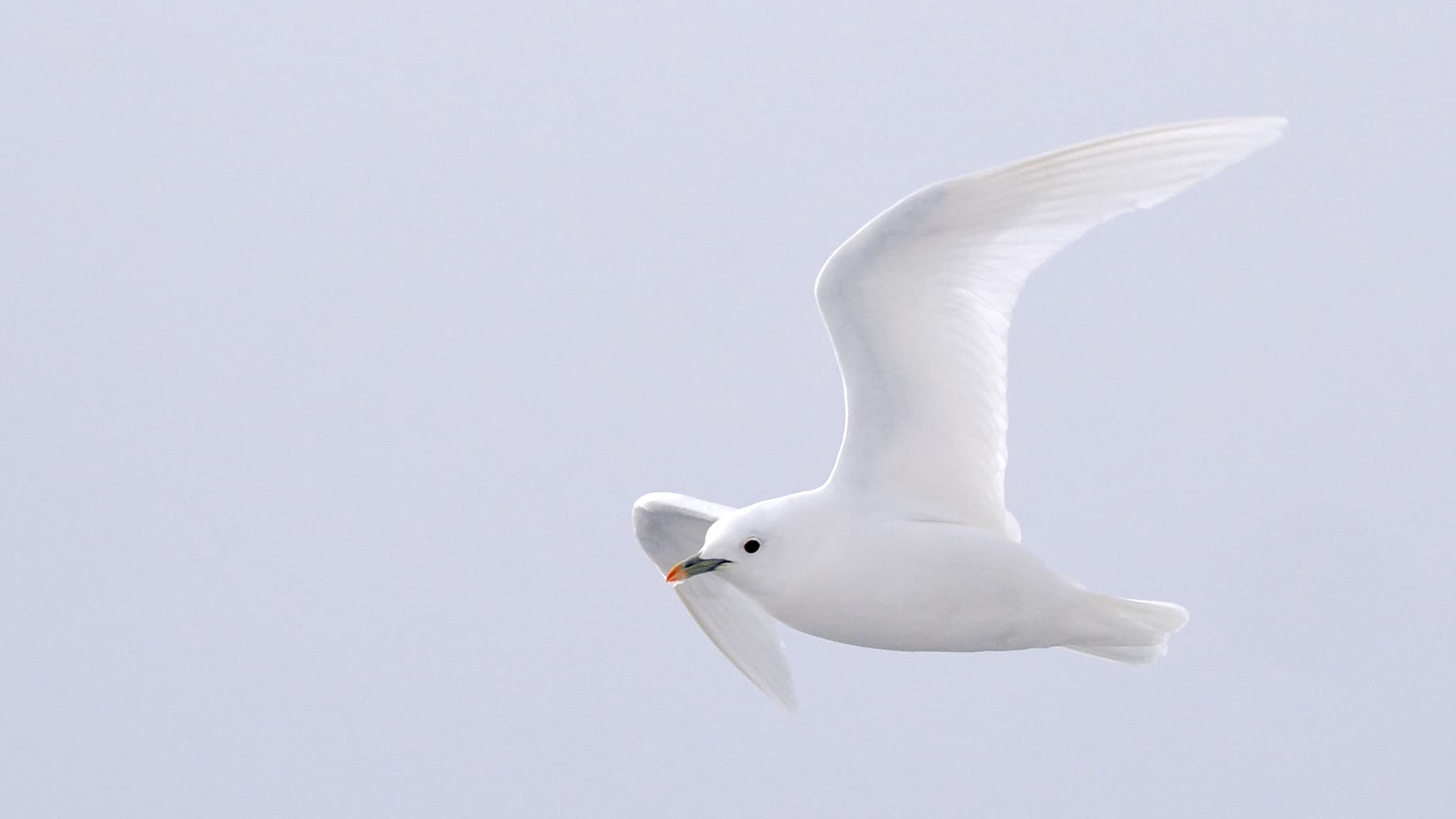
Image: steve b (cc0)
NameIvory Gull
Common NameIvory Gull
Scientific NamePagophila eburnea
FamilyLaridae
Wingspan (cm)115
Length (cm)42.5
Weight (g)560
Plumage DetailsAdults are entirely pure white, including all flight feathers, giving them a striking appearance. They have a small, dark eye and a distinctive bicolored bill that is yellowish-green at the base with a bright orange or reddish tip. Their legs and feet are black. Juveniles have some dark spotting on the face and back, and a darker bill.
Vocalization / CallVocalizations include harsh, high-pitched 'kree-kree' calls, often described as grating or crow-like. They also produce softer 'kew' notes and various squawks, especially when agitated or around food sources.
Primary Dietomnivore
Primary Habitatssea ice, tundra, coastal cliffs, open ocean
Conservation Statusnear-threatened
Geographic RangeThe Ivory Gull breeds in the high Arctic regions of Canada, Greenland, Svalbard, and Russia, typically on remote coastal cliffs or rocky islets. In winter, it remains associated with the pack ice, extending its range further south into sub-Arctic waters.
Identifying Featurespure white plumage, dark eye, bicolored bill (yellowish-green base, orange/red tip), black legs and feet, medium size
Description
The Ivory Gull is a medium-sized, pure white gull of the high Arctic, perfectly camouflaged against its icy environment. It is an opportunistic scavenger, often found near polar bear kills or seal breathing holes, and also forages for marine invertebrates and fish. This species exhibits a bold and curious demeanor.