Ivory-billed Woodpecker
NameIvory-billed Woodpecker
Common NameIvory-billed Woodpecker
Scientific NameCampephilus principalis
FamilyPicidae
Wingspan (cm)78
Length (cm)50
Weight (g)510
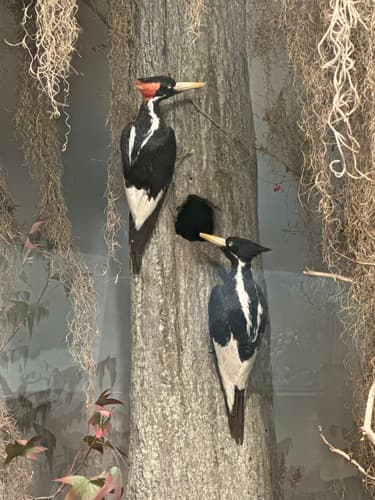
Plumage DetailsPredominantly glossy black body with prominent white stripes running down the neck and back, meeting to form a 'saddle' on the lower back. Large white patches are visible on the trailing edge of the inner wing. Males have a distinctive red crest, while females have a black crest. Both sexes possess a large, pale ivory-colored bill.
Vocalization / CallKnown for a distinctive, trumpet-like 'kent' call, often repeated. It also produces loud, double-rap drumming sounds on trees.
Primary Dietinsectivore
Primary Habitatsforest
Conservation Statuscritically-endangered
Geographic RangeHistorically found in the old-growth bottomland hardwood forests and pine forests of the southeastern United States (from North Carolina to Florida, west to Texas, and up the Mississippi River valley) and Cuba.
Identifying FeaturesVery large size, Glossy black plumage with prominent white stripes on neck and back, Large white wing patches visible in flight, Prominent ivory-colored bill, Red crest (male) or black crest (female), Trumpet-like 'kent' call
Description
The Ivory-billed Woodpecker is a very large, striking woodpecker, primarily black with extensive white markings. It is known for its powerful, chisel-like ivory-colored bill, used to peel bark from dead trees in search of beetle larvae. This species is considered critically endangered, with many believing it to be extinct.