Ibisbill
Image: Василий Егоров (cc-by-nc)
NameIbisbill
Common NameIbisbill
Scientific NameIbidorhyncha struthersii
FamilyIbidorhynchidae
Wingspan (cm)52
Length (cm)40
Weight (g)295
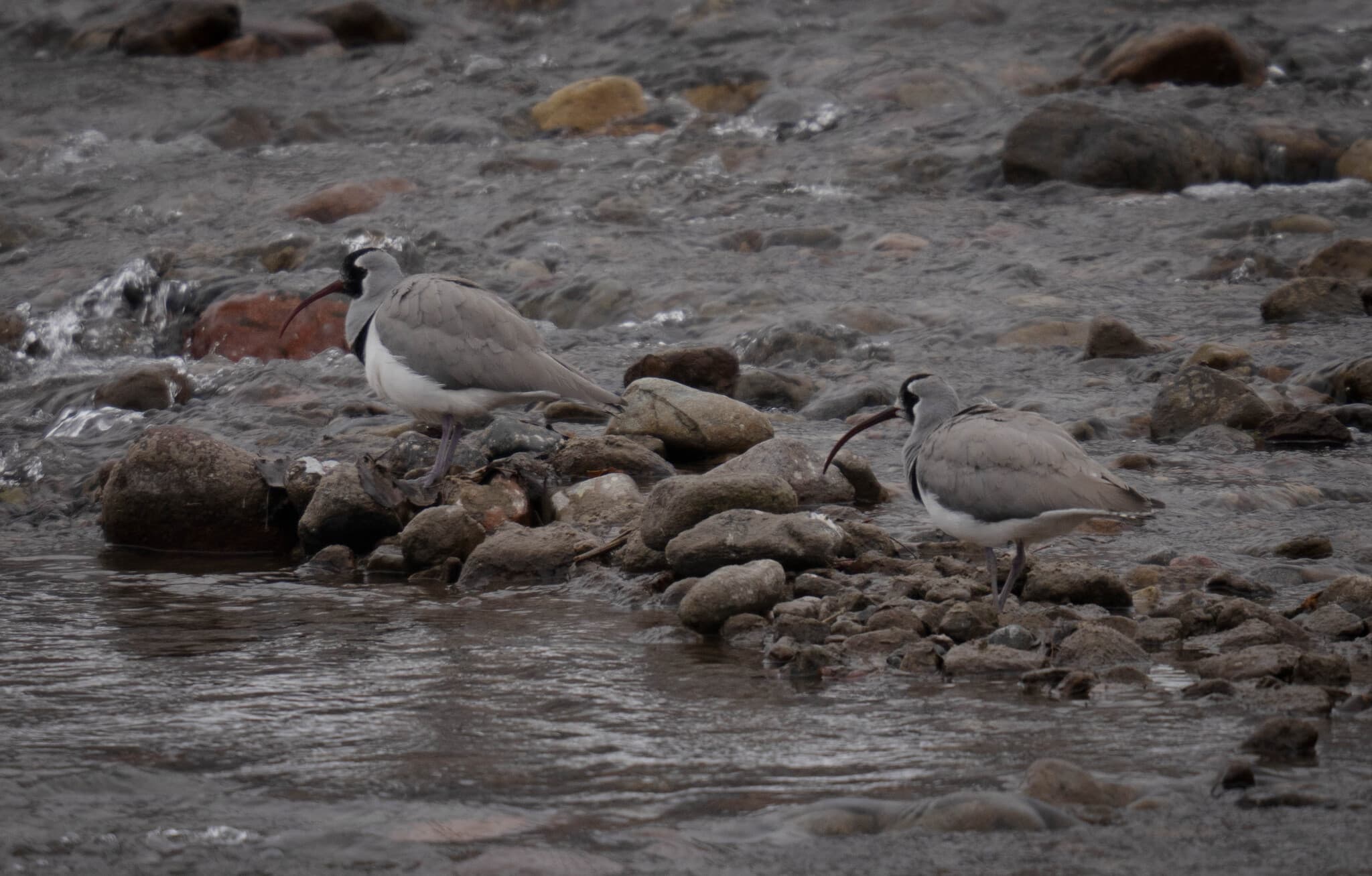
Plumage DetailsAdults have a grey body, white belly, and a prominent black face, forehead, and breast band, which is bordered by a thin white line. The back and wings are grey, and the tail is grey with a white tip. The most distinctive feature is its long, dark red, downcurved bill and dull red legs.
Vocalization / CallIts vocalizations include a clear, piping 'klee-klee' or 'tee-tee-tee' call, sometimes described as a plaintive whistle.
Primary Dietinsectivore
Primary Habitatsrivers, streams, rocky riverbeds, high-altitude wetlands
Conservation Statusleast-concern
Geographic RangeFound in the high mountains and plateaus of Central Asia, including the Himalayas, Tibetan Plateau, and surrounding mountain ranges, from Kazakhstan and Kyrgyzstan east to China.
Identifying Featureslong, downcurved red bill, grey body with white belly, black face and breast band, red legs, prefers rocky riverbeds
Description
The Ibisbill is a unique wader characterized by its striking long, downcurved red bill and distinctive head pattern. It is typically found foraging for invertebrates in the fast-flowing, stony rivers and streams of high-altitude regions.