Horned Grebe
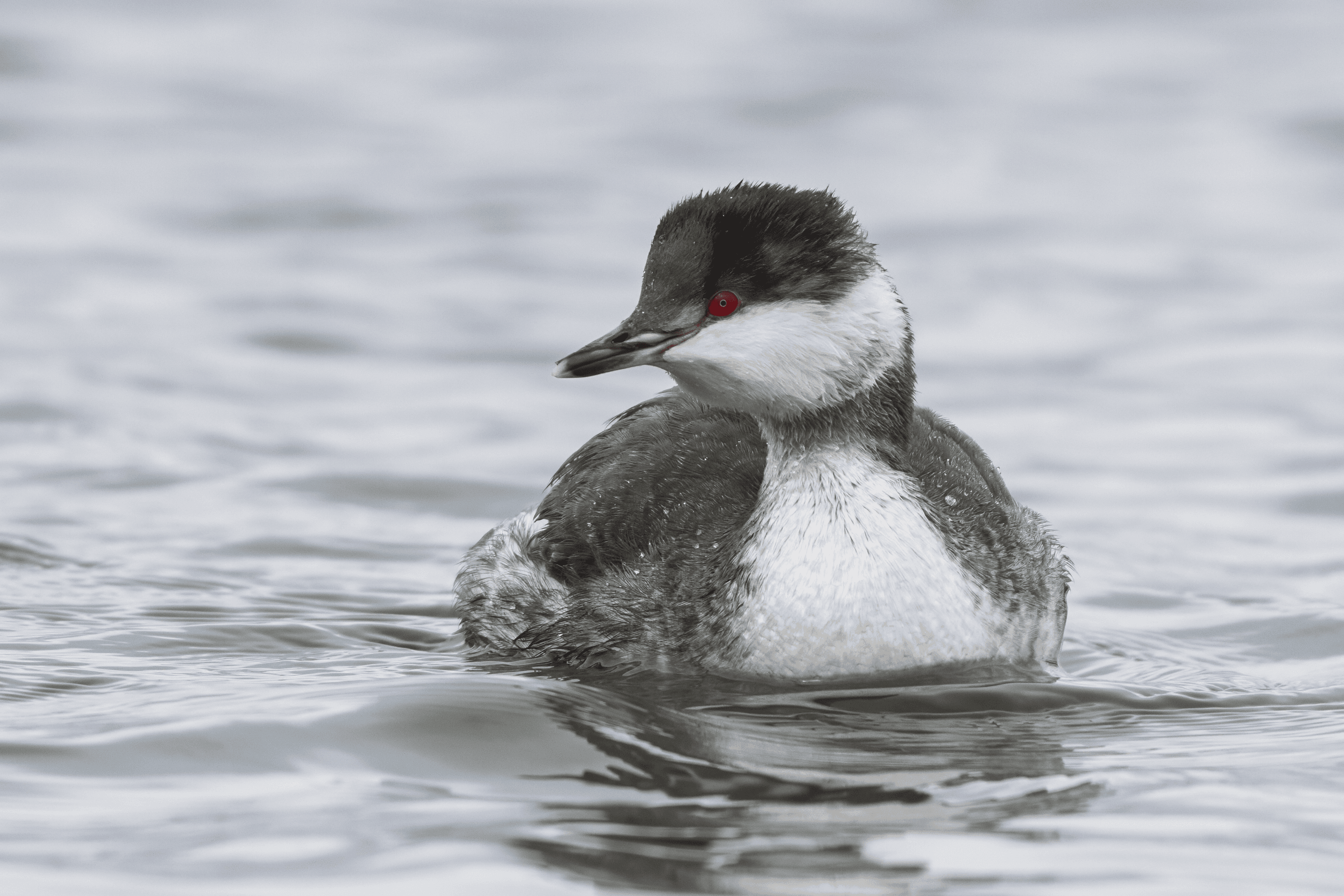
Image: Chuck Homler, Focus On Wildlife (CC BY-SA 4.0)
NameHorned Grebe
Common NameHorned Grebe
Scientific NamePodiceps auritus
FamilyPodicipedidae
Wingspan (cm)66
Length (cm)34.5
Weight (g)435
Plumage DetailsIn winter plumage, as shown, the Horned Grebe has a dark grey to black cap that extends below the eye, contrasting sharply with bright white cheeks and throat. Its back is dark grey, and its underparts are pure white. The eye is a striking ruby red. In breeding plumage, it develops prominent golden-orange feather tufts ('horns') behind the eyes, a black head, and a rich rufous neck and flanks.
Vocalization / CallHorned Grebes are generally quiet outside of the breeding season. During breeding, their vocalizations include a variety of trills, whines, croaks, and chattering calls, often used in courtship displays.
Primary Dietpiscivore
Primary Habitatscoastal, wetland
Conservation Statusleast-concern
Geographic RangeBreeds across northern North America and Eurasia. Winters along the coasts of North America (Atlantic and Pacific) and Eurasia, as well as on large inland lakes.
Identifying FeaturesBright red eye, Slender, pointed bill, Dark cap and white cheeks in winter plumage, Golden 'horns' and rufous flanks in breeding plumage, Small, compact body adapted for diving
Description
The Horned Grebe is a small, migratory diving bird known for its distinctive appearance, especially its bright red eyes. In winter, it exhibits a clean black and white pattern, while breeding plumage features striking golden 'horns' and rufous flanks. These birds are agile swimmers and divers, primarily feeding on aquatic prey.