Green Honeycreeper
NameGreen Honeycreeper
Common NameGreen Honeycreeper
Scientific NameChlorophanes spiza
FamilyThraupidae
Wingspan (cm)13
Length (cm)13.5
Weight (g)20
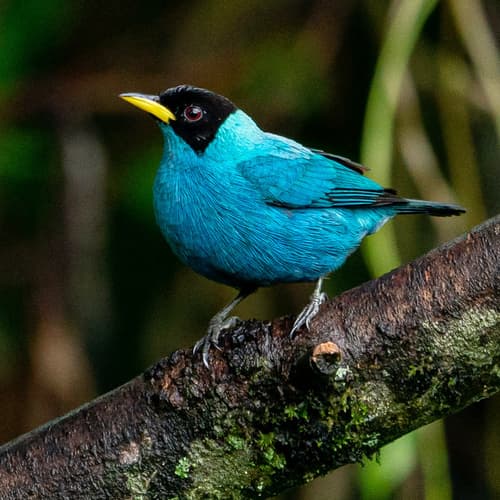
Plumage DetailsAdult males have a brilliant turquoise-blue body, black head, and a bright yellow bill with a black culmen. Females are mostly green, paler on the underparts, with a yellow lower mandible and a dusky upper mandible. Juveniles resemble females.
Vocalization / CallTheir vocalizations include thin, high-pitched 'tsip' or 'seet' notes, often given in a series. They may also produce a squeaky, somewhat insect-like trill.
Primary Dietomnivore
Primary Habitatsforest
Conservation Statusleast-concern
Geographic RangeFound from southern Mexico through Central America and across much of northern South America, extending south to Bolivia and southeastern Brazil. They inhabit humid tropical and subtropical forests.
Identifying FeaturesBright turquoise-blue plumage (male), Black head (male), Bright yellow bill with black culmen, Green plumage (female), Slender, slightly decurved bill
Description
The Green Honeycreeper is a vibrant tanager known for its striking sexual dimorphism. Males are brilliant turquoise-blue with a black head, while females are predominantly green. These active birds forage in the forest canopy, primarily feeding on fruits and nectar.