Greater Honeyguide
NameGreater Honeyguide
Common NameGreater Honeyguide
Scientific NameIndicator indicator
FamilyIndicatoridae
Wingspan (cm)36
Length (cm)19.5
Weight (g)50
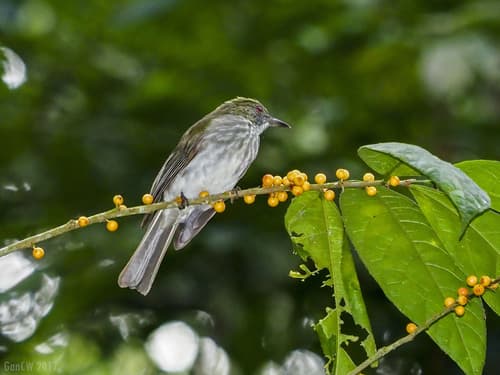
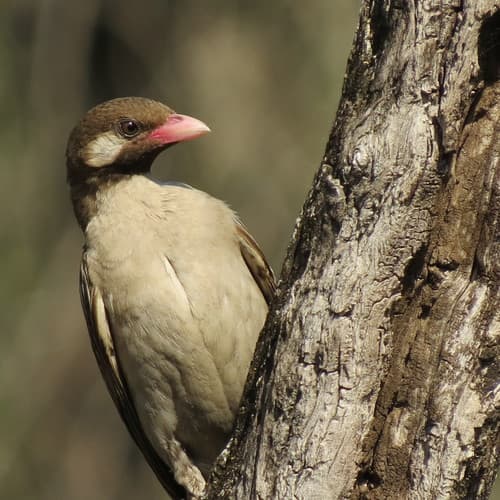
Plumage DetailsAdult males have a dark brown head, olive-brown back, and pale greyish-white underparts, with a distinctive pinkish bill. Females are generally duller, with less distinct markings. Juveniles are olive-brown overall with a yellowish throat. White outer tail feathers are a key feature, especially visible in flight.
Vocalization / CallVocalizations include a distinctive 'victor' call, churring, and trilling notes. The guiding call, used to attract humans or honey badgers, is a loud, chattering 'churr-churr-churr' or 'tirr-tirr-tirr'.
Primary Dietomnivore
Primary Habitatsforest, grassland
Conservation Statusleast-concern
Geographic RangeWidespread across sub-Saharan Africa, found in a variety of wooded habitats from Senegal and Ethiopia south to South Africa.
Identifying FeaturesPinkish bill, Brown head with pale underparts, White outer tail feathers (visible in flight), Guiding behavior towards beehives, Brood parasitic
Description
The Greater Honeyguide is a medium-sized bird known for its unique symbiotic relationship with humans, guiding them to wild beehives. It primarily feeds on beeswax and bee larvae, a diet facilitated by its ability to digest wax. This species is also a brood parasite, laying its eggs in the nests of other bird species.