Greater Flamingo
NameGreater Flamingo
Common NameGreater Flamingo
Scientific NamePhoenicopterus roseus
FamilyPhoenicopteridae
Wingspan (cm)155
Length (cm)132.5
Weight (g)3000
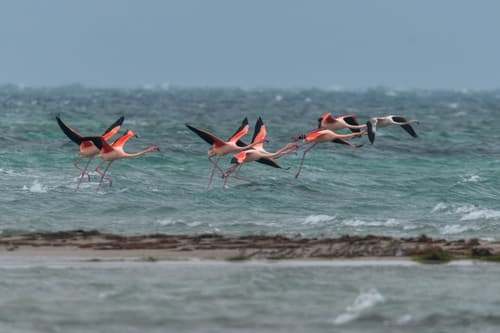
Plumage DetailsPredominantly pale pinkish-white plumage, with bright pink wing coverts and black primary and secondary flight feathers that are prominent during flight. They have long, slender pink legs and a large, pink bill with a black tip, which is distinctly down-curved.
Vocalization / CallVocalizations include goose-like honking, trumpeting, and grunting sounds, particularly when feeding or in flight. They are generally quite noisy in large colonies.
Primary Dietomnivore
Primary Habitatssaline lagoons, estuaries, mudflats, coastal wetlands, salt lakes
Conservation Statusleast-concern
Geographic RangeWidespread across parts of Africa, Asia, and southern Europe, inhabiting coastal and inland wetlands. Significant populations are found in the Mediterranean region, parts of the Middle East, India, and across much of sub-Saharan Africa.
Identifying FeaturesLargest flamingo species, Pale pink body with bright pink wing patches and black flight feathers, Long, slender pink legs, Large, pink bill with a black tip, distinctly bent downwards, Often seen in large, noisy flocks
Description
The Greater Flamingo is the largest and most widespread flamingo species, characterized by its pale pink plumage, long legs, and distinctive down-curved bill. These highly social birds are often found in large flocks in shallow saline or brackish waters, where they filter feed.