Great Bustard
NameGreat Bustard
Common NameGreat Bustard
Scientific NameOtis tarda
FamilyOtididae
Wingspan (cm)210
Length (cm)90
Weight (g)12000
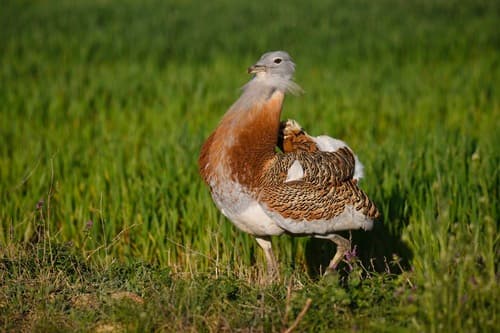
Plumage DetailsMales have a grey head and neck, a broad rufous-chestnut band across the breast, and white underparts. The back and wings are barred brown and black, with significant white patches visible in flight. During the breeding season, males develop prominent white 'whiskers' on their chin. Females are similar but duller and lack the prominent whiskers.
Vocalization / CallGreat Bustards are generally silent outside of the breeding season. During courtship, males produce a deep, booming call. They may also emit a harsh alarm call when disturbed.
Primary Dietomnivore
Primary Habitatsgrassland
Conservation Statusvulnerable
Geographic RangeThe Great Bustard has a patchy distribution across Europe and Asia, ranging from Spain and Portugal eastward through central Europe, Russia, and into Central Asia and China.
Identifying FeaturesVery large size, grey head and neck, rufous breast band, barred brown and black upperparts, white belly, male 'whiskers' during breeding season
Description
The Great Bustard is a very large, ground-dwelling bird, often considered the heaviest flying animal. Males are significantly larger than females and display elaborate courtship rituals in open grassland habitats. They are generally wary and spend most of their time foraging on the ground.