Flightless Cormorant
NameFlightless Cormorant
Common NameFlightless Cormorant
Scientific NameNannopterum harrisi
FamilyPhalacrocoracidae
Wingspan (cm)48
Length (cm)95
Weight (g)3750
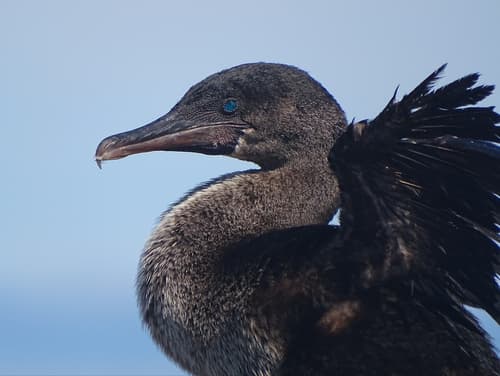
Plumage DetailsAdults have dark, shaggy plumage that is blackish-brown on the back and paler brown on the belly. Their eyes are a striking bright turquoise, and they possess a long, hooked bill adapted for catching prey.
Vocalization / CallVocalizations are generally limited, consisting of low grunts and gurgling sounds, particularly during courtship and nesting.
Primary Dietpiscivore
Primary Habitatscoastal
Conservation Statusvulnerable
Geographic RangeEndemic to the Galápagos Islands, primarily found on the western islands of Fernandina and Isabela, with smaller populations on Santiago and Floreana.
Identifying FeaturesFlightless with small, vestigial wings, Large body size for a cormorant, Dark, shaggy plumage, Bright turquoise eyes, Long, hooked bill, Endemic to the Galápagos Islands
Description
The Flightless Cormorant is a large, dark-plumaged seabird endemic to the Galápagos Islands, notable for its inability to fly due to its small, vestigial wings. It is an expert diver, using its powerful legs and webbed feet to hunt fish and other marine prey in the shallow coastal waters.