Eurasian Nightjar
NameEurasian Nightjar
Common NameEurasian Nightjar
Scientific NameCaprimulgus europaeus
FamilyCaprimulgidae
Wingspan (cm)55
Length (cm)26
Weight (g)75
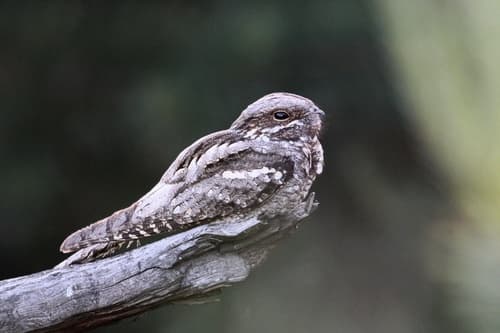
Plumage DetailsThe plumage is highly cryptic, featuring intricate patterns of grey, brown, black, and buff, mimicking tree bark and dead leaves. Males often have small white patches on the primary wing feathers and outer tail feathers, which are less prominent or absent in females.
Vocalization / CallIts most characteristic vocalization is a continuous, mechanical, churring trill, often described as a 'churr' or 'whirring' sound, which can last for several minutes. It also produces softer 'coo-ic' calls.
Primary Dietinsectivore
Primary Habitatsforest, grassland
Conservation Statusleast-concern
Geographic RangeBreeds across most of Europe and temperate Asia, migrating to sub-Saharan Africa for the winter. Its breeding range extends from the Iberian Peninsula eastwards to Mongolia and northern China.
Identifying FeaturesCryptic mottled plumage, Nocturnal or crepuscular activity, Long, pointed wings, Short bill with wide gape, Large dark eyes, Distinctive churring call
Description
The Eurasian Nightjar is a nocturnal bird known for its superb camouflage, allowing it to blend seamlessly with tree bark and leaf litter. It is an aerial insectivore, catching moths and other flying insects in flight during dusk and dawn. This species typically rests horizontally on branches or on the ground during the day.