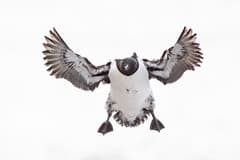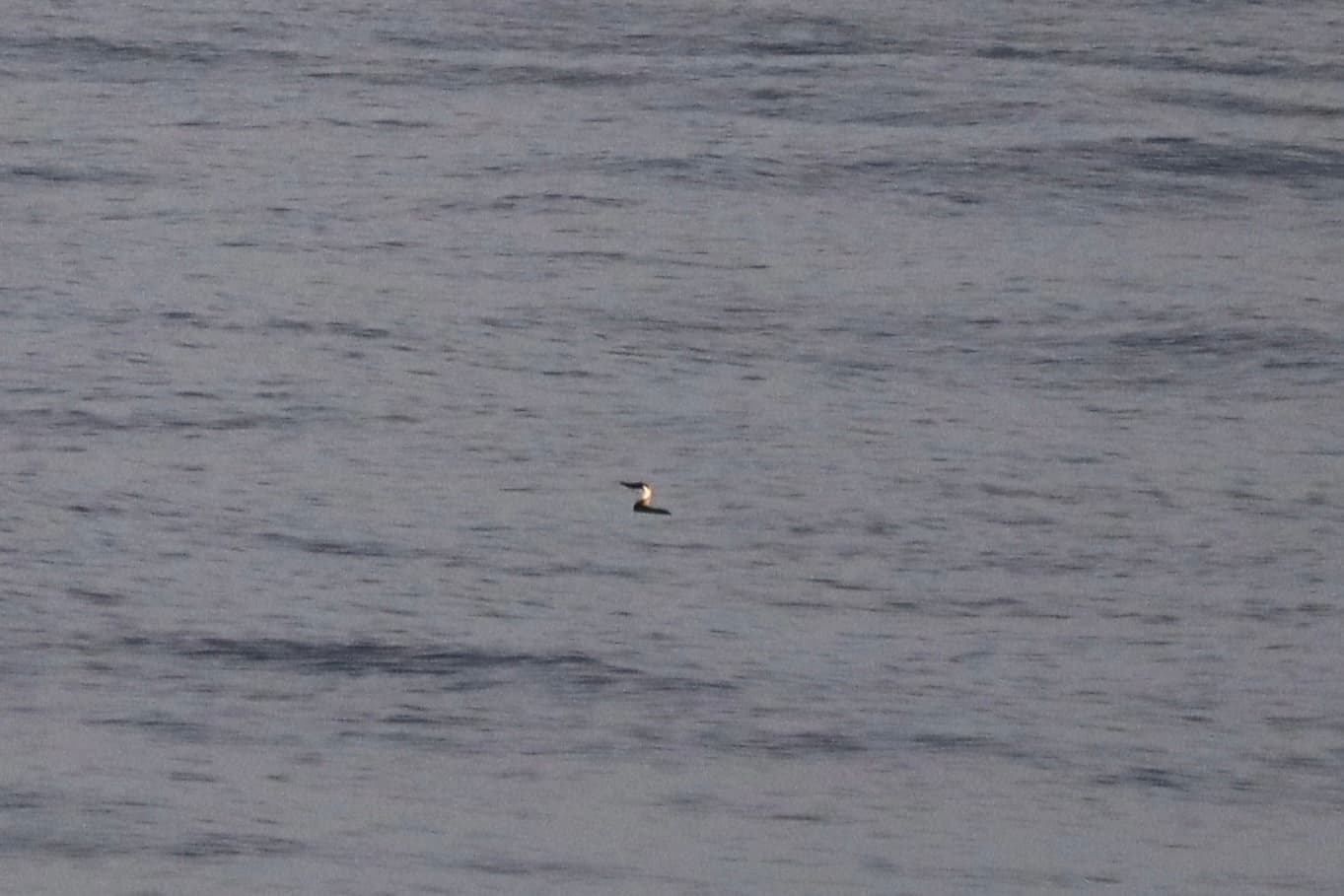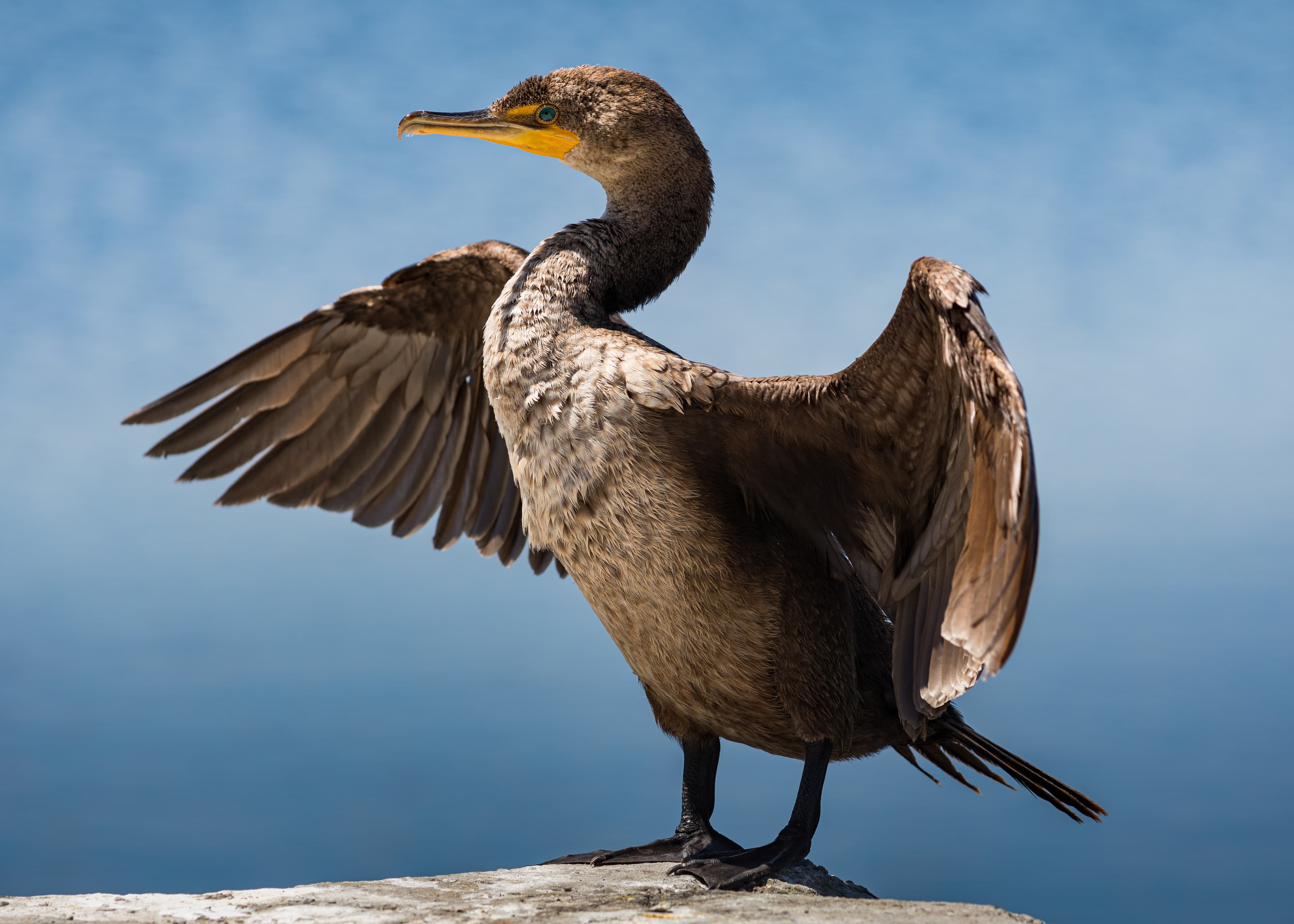
Double-crested Cormorant
Image: <bdi><a href="https://www.wikidata.org/wiki/Q57175365" class="extiw" title="d:Q57175365"><span title="German-American photographer, Wikipedian, and Executive Director of the Wiki Education Foundation">Frank Schulenburg</span></a></bdi> (CC BY-SA 4.0)
NameDouble-crested Cormorant
Common NameDouble-crested Cormorant
Scientific NameNannopterum auritum
FamilyPhalacrocoracidae
Wingspan (cm)137
Length (cm)80.5
Weight (g)1850
Plumage DetailsJuveniles, like the one pictured, have brownish plumage overall with a paler, often whitish, throat and chest. Adults are mostly black with a greenish sheen, an orange-yellow gular pouch (throat skin), and two small crests on the head during the breeding season.
Vocalization / CallGenerally silent away from breeding colonies. At nesting sites, they produce a variety of guttural grunts, croaks, and hisses.
Primary Dietpiscivore
Primary Habitatscoastal areas, lakes, rivers, estuaries, reservoirs
Conservation Statusleast-concern
Geographic RangeWidespread across North America, breeding from Alaska and Canada south through the United States and Mexico. They winter along coasts and inland waters in the southern parts of their breeding range, extending into Central America and the Caribbean.
Identifying Featureshooked bill, orange-yellow gular pouch (throat skin), long, kinked neck, dark plumage (brownish in juveniles, black in adults), webbed feet, often seen drying wings in a spread-wing posture
Description
This large, dark aquatic bird is commonly seen perched with its wings spread to dry its feathers, a distinctive behavior due to its less oily plumage. It is an expert diver, using its strong webbed feet to pursue fish underwater in both fresh and saltwater environments.