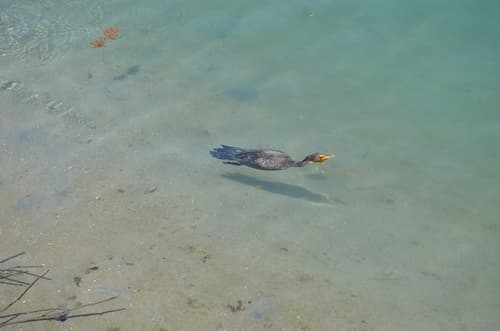
Double-crested Cormorant
NameDouble-crested Cormorant
Common NameDouble-crested Cormorant
Scientific NamePhalacrocorax auritus
FamilyPhalacrocoracidae
Wingspan (cm)118.5
Length (cm)80.5
Weight (g)1850
Plumage DetailsAdults are mostly black with a greenish sheen, especially on the back and wings. They have distinctive orange-yellow facial skin and a gular pouch. During breeding season, they may develop two small, curly crests on their heads, which are often not prominent.
Vocalization / CallVocalizations are typically low, guttural grunts, croaks, and hisses, often heard at nesting colonies.
Primary Dietpiscivore
Primary Habitatscoastal, wetland
Conservation Statusleast-concern
Geographic RangeWidespread across North America, breeding from Alaska and Newfoundland south to Florida and Mexico. They are found along coastlines, large inland lakes, and major rivers.
Identifying Featuresdark, almost black plumage, long neck, hooked bill, orange-yellow facial skin and gular pouch, often seen swimming low in the water, frequently perches with wings spread to dry
Description
The Double-crested Cormorant is a large, dark waterbird commonly found in North America. It is an expert diver, propelling itself underwater with its feet to catch fish. After fishing, it often perches with its wings spread wide to dry its feathers, as they are not fully waterproof.