Double-banded Plover
NameDouble-banded Plover
Common NameDouble-banded Plover
Scientific NameCharadrius bicinctus
FamilyCharadriidae
Wingspan (cm)41
Length (cm)19.5
Weight (g)58.5
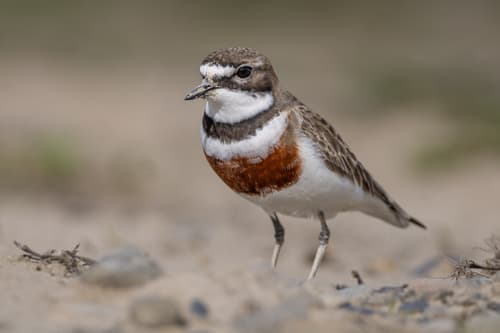
Plumage DetailsBreeding adults have brown upperparts, white underparts, and two distinct breast bands: an upper black band and a lower rufous-chestnut band. The head features a white forehead bordered by black, and a white supercilium. Non-breeding birds and juveniles have less distinct or absent bands.
Vocalization / CallA sharp, high-pitched 'chip' or 'pip' call, often given when disturbed or in flight.
Primary Dietinsectivore
Primary Habitatscoastal, wetland, grassland
Conservation Statusleast-concern
Geographic RangeBreeds primarily in New Zealand, migrating to southeastern Australia, Tasmania, and various Pacific islands (including New Caledonia, Vanuatu, and Fiji) during the non-breeding season.
Identifying FeaturesDouble breast bands (black and rufous in breeding plumage), Small plover size and shape, White forehead and supercilium, Brown upperparts and white underparts
Description
A small, distinctive shorebird characterized by its two prominent breast bands, particularly striking in breeding plumage. It typically forages on open ground, often near water, using a characteristic run-and-pause method to locate invertebrates.