Domestic Mallard
NameDomestic Mallard
Common NameDomestic Mallard
Scientific NameAnas platyrhynchos domesticus
FamilyAnatidae
Wingspan (cm)90
Length (cm)60
Weight (g)2500
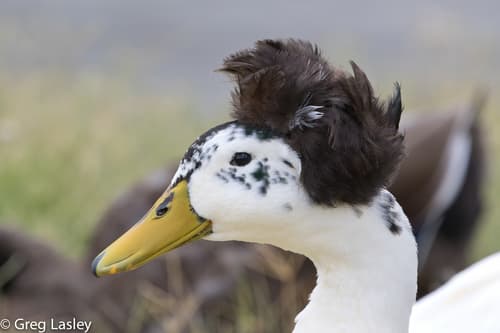
Plumage DetailsThe bird in the image displays a prominent crest of dark brown to black feathers on its head. Its head and neck plumage are predominantly white with irregular black mottling and speckles, particularly around the eyes and cheeks. The bill is bright yellow. Body plumage, though not fully visible, appears to be largely white.
Vocalization / CallDomestic Mallards, especially females, are known for their loud, distinctive "quack-quack-quack" vocalizations. Males typically have a softer, rasping call.
Primary Dietomnivore
Primary Habitatsurban, wetland
Conservation Statusleast-concern
Geographic RangeDomestic Mallards are found worldwide wherever they are kept by humans. Their wild ancestors, Mallards, have a widespread Holarctic distribution across North America, Europe, Asia, and parts of North Africa.
Identifying FeaturesProminent feather crest on head, Mottled white and black head/neck plumage, Bright yellow bill, Domesticated appearance, Large body size compared to wild ducks
Description
This is a domestic duck, likely a breed derived from the Mallard, characterized by a distinctive crest of feathers on its head. Its plumage is a striking mix of white and black mottling, particularly on the head and neck, with a bright yellow bill. Domestic Mallards are commonly found in human-managed environments like farms and parks.