Chestnut-eared Bunting
NameChestnut-eared Bunting
Common NameChestnut-eared Bunting
Scientific NameEmberiza fucata
FamilyEmberizidae
Wingspan (cm)21.5
Length (cm)15.5
Weight (g)17.5
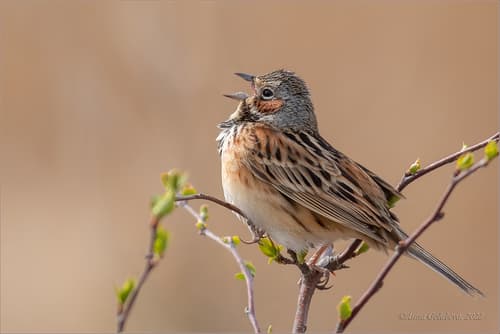
Plumage DetailsMales have a grey head with fine black streaking on the crown and nape, striking chestnut ear-coverts, and a black malar stripe. The back is streaked brown, the rump is unstreaked chestnut, and the underparts are whitish with streaked flanks. Two white wing-bars are visible. Females and immatures are duller, with less defined head patterns and paler chestnut ear-coverts.
Vocalization / CallThe song is a rapid, high-pitched series of notes, often described as 'tsi-tsi-tsi-tsee-tsee-tsee'. The call is a sharp 'tsip' or 'zit'.
Primary Dietomnivore
Primary Habitatsforest, grassland
Conservation Statusleast-concern
Geographic RangeBreeds across eastern Asia, including parts of Russia, China, Korea, and Japan. It migrates south for the winter, ranging into southern China, Southeast Asia (e.g., Vietnam, Laos, Thailand, Myanmar), and northeastern India.
Identifying FeaturesProminent chestnut ear-coverts (especially in males), Grey head with black streaking on crown, Unstreaked chestnut rump, Streaked brown back and flanks, Two distinct white wing-bars
Description
The Chestnut-eared Bunting is a medium-sized passerine bird known for its distinctive head patterns. Males display prominent chestnut ear-coverts against a grey head, while females are duller. This species typically forages on the ground, seeking seeds and insects.