Chestnut-bellied Flowerpiercer
NameChestnut-bellied Flowerpiercer
Common NameChestnut-bellied Flowerpiercer
Scientific NameDiglossa gloriosa
FamilyThraupidae
Wingspan (cm)22
Length (cm)14
Weight (g)12.5
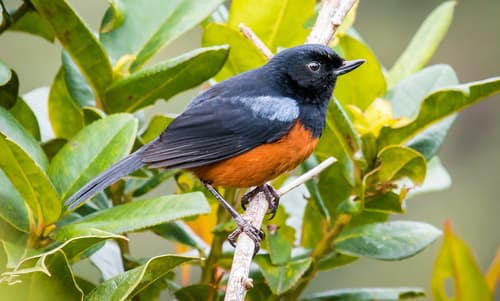
Plumage DetailsAdult males have glossy black plumage on the head, back, wings, and tail, with a prominent pale blue-gray patch on the shoulder. The underparts, from the belly to the undertail coverts, are a vibrant chestnut. The bill is black and distinctly upturned with a hooked tip.
Vocalization / CallIts song consists of a series of high-pitched, thin, and sibilant notes, often described as a rapid 'tsee-tsee-tsee-tsee' or 'swee-swee-swee'. Calls include sharp 'tsit' or 'chip' notes.
Primary Dietnectarivore
Primary Habitatsforest, mountain
Conservation Statusleast-concern
Geographic RangeThe Chestnut-bellied Flowerpiercer is endemic to the high Andes of western Venezuela, specifically found in the states of Mérida and Táchira.
Identifying FeaturesGlossy black upperparts, Bright chestnut belly, Pale blue-gray shoulder patch, Distinctive upturned, hooked bill
Description
This small, striking tanager is characterized by its glossy black upperparts and a contrasting rich chestnut belly. It possesses a unique upturned, hooked bill, specialized for piercing flower corollas to extract nectar. It is typically found foraging in the dense shrubbery of high-altitude Andean forests.