Capercaillie
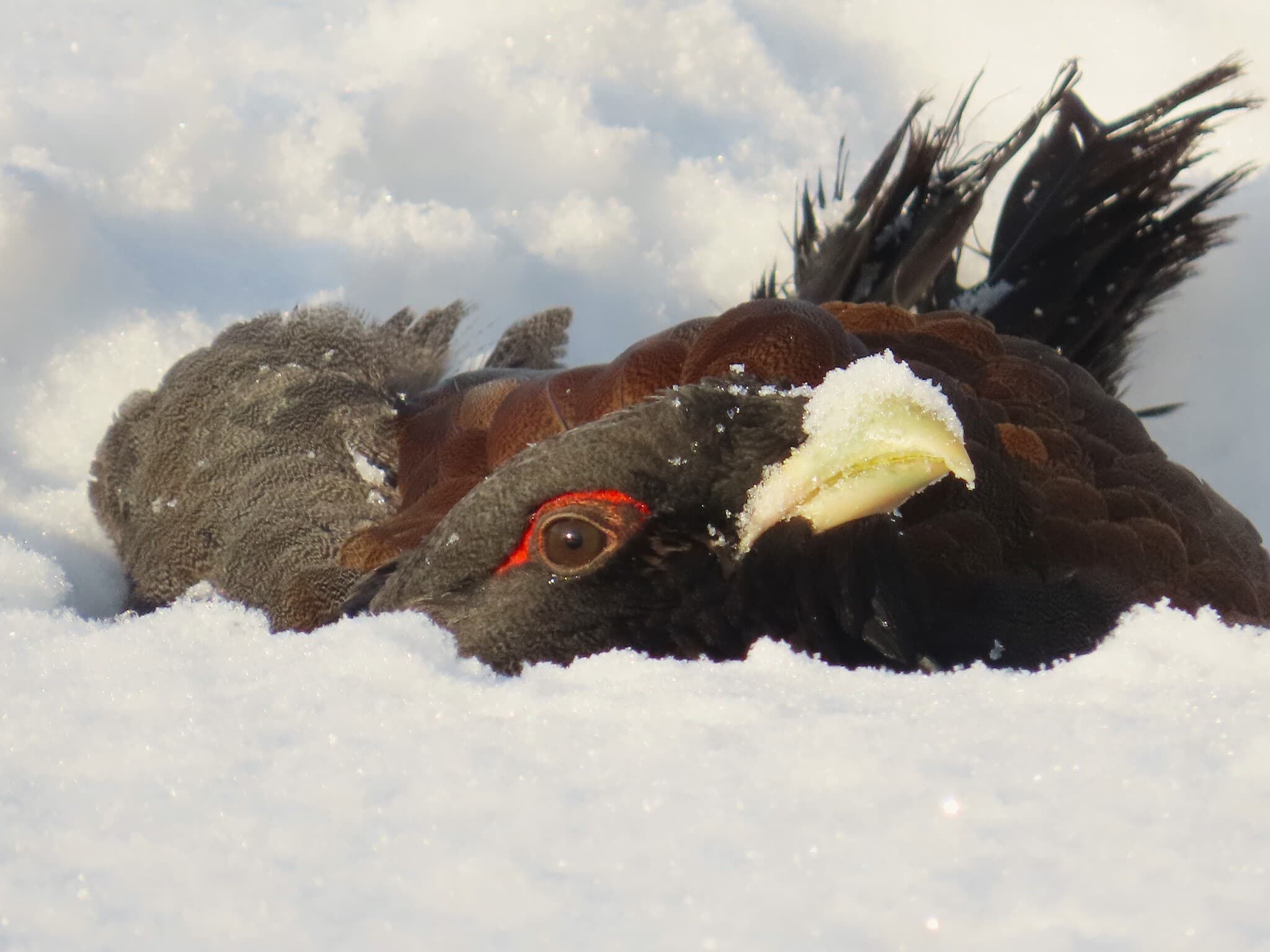
Image: Ольга Митрофанова (cc-by-nc)
NameCapercaillie
Common NameCapercaillie
Scientific NameTetrao urogallus
FamilyPhasianidae
Wingspan (cm)107.5
Length (cm)82
Weight (g)5000
Plumage DetailsMales have dark grey to black plumage with an iridescent dark green breast, dark brown wings, and a prominent red wattle above each eye. They possess a large, fan-shaped tail. Females are mottled brown and black with a rufous breast.
Vocalization / CallMales produce a distinctive lekking call, a series of clicks, pops, and gurgles that culminates in a 'cork-popping' sound. They also have alarm calls.
Primary Dietomnivore
Primary Habitatsforest
Conservation Statusleast-concern
Geographic RangeFound across northern Eurasia, from Scotland and Scandinavia eastward through Russia to Siberia.
Identifying Featuresvery large size, dark plumage (male), red wattle above eye (male), fan-shaped tail (male), distinctive lekking display
Description
The Capercaillie is a very large game bird, with males significantly larger and more strikingly colored than females. Males are known for their elaborate courtship displays during the breeding season, often performed in open areas within their forest habitat.