Cape Rock-Thrush
NameCape Rock-Thrush
Common NameCape Rock-Thrush
Scientific NameMonticola rupestris
FamilyMuscicapidae
Wingspan (cm)32
Length (cm)21
Weight (g)52
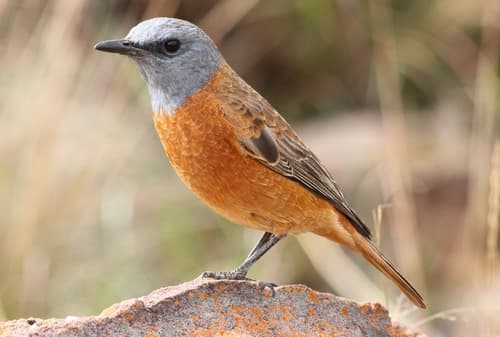
Plumage DetailsAdult males have a slate-grey head, throat, and upper breast. The back and wings are brownish-grey, while the lower breast, belly, flanks, and rump are a vibrant rufous-orange. Females are duller, with a mottled grey-brown head and breast, and paler rufous underparts.
Vocalization / CallIts song is a melodious, fluty series of whistles, often incorporating mimicry of other bird species. The alarm call is a harsh, churring sound.
Primary Dietomnivore
Primary Habitatsmountain, grassland
Conservation Statusleast-concern
Geographic RangeEndemic to southern Africa, primarily found in South Africa, Lesotho, and Eswatini (formerly Swaziland). It inhabits rocky hillsides, mountains, and gorges.
Identifying FeaturesGrey head and throat (male), Bright rufous-orange underparts (male), Brownish-grey back and wings, Upright posture on rocks, Preference for rocky, mountainous habitats
Description
The Cape Rock-Thrush is a medium-sized, thrush-like bird known for its striking plumage. Males display a grey head and throat contrasting with bright rufous underparts. It is typically found in rocky, mountainous terrain, often perching conspicuously on boulders.