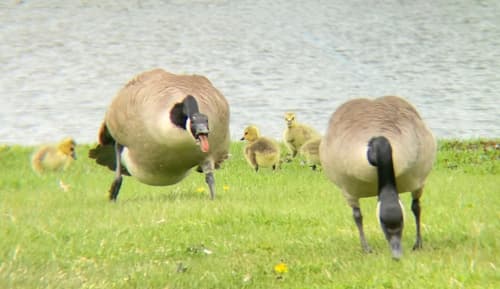
Canada Goose
NameCanada Goose
Common NameCanada Goose
Scientific NameBranta canadensis
FamilyAnatidae
Wingspan (cm)150
Length (cm)90
Weight (g)4500
Plumage DetailsAdults have a black head and neck with a prominent white chin strap that extends across the throat. The body is typically brownish-gray, with a lighter, often whitish, breast and belly. The tail is black, and the undertail coverts are white. Juveniles (goslings) are covered in soft yellow down with some grayish markings.
Vocalization / CallKnown for its loud, resonant 'honk' or 'a-honk' call, often given in flight or when alarmed. They also produce various hisses, grunts, and clucks, especially when communicating within a flock or with their young.
Primary Dietomnivore
Primary Habitatslakes, ponds, rivers, marshes, agricultural fields, urban parks, suburban areas
Conservation Statusleast-concern
Geographic RangeNative to North America, breeding across Canada and the northern United States, and wintering in the southern United States and Mexico. Introduced populations exist in parts of Europe and New Zealand.
Identifying FeaturesLarge size, Black head and neck, White chin strap, Brownish-gray body, Loud honking call, Often seen in flocks near water
Description
The Canada Goose is a large wild goose species with a distinctive black head and neck, white chin strap, and brownish-gray body. They are highly adaptable waterfowl, often seen grazing in grassy areas near water bodies, and are known for their migratory patterns and strong family bonds, as evidenced by the adults with goslings in the image.