Bristle-thighed Curlew
NameBristle-thighed Curlew
Common NameBristle-thighed Curlew
Scientific NameNumenius tahitiensis
FamilyScolopacidae
Wingspan (cm)84
Length (cm)42
Weight (g)470
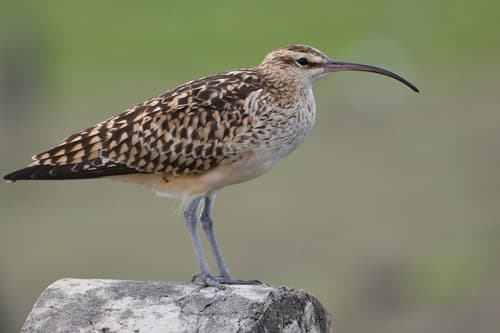
Plumage DetailsUpperparts are mottled brown and buff with dark streaks; underparts are pale buff to whitish, with streaking on the breast and flanks. The rump and tail are buffy with dark barring. A key feature, though not always visible, are the stiff, bristle-like feathers on its thighs.
Vocalization / CallIts calls include a clear, whistled 'too-weet' or 'cur-lee' and a trilling alarm call, often given in flight.
Primary Dietomnivore
Primary Habitatstundra, coastal
Conservation Statusnear-threatened
Geographic RangeBreeds in western Alaska, primarily on the Seward Peninsula and Yukon-Kuskokwim Delta. It undertakes one of the longest migratory journeys of any shorebird, wintering on islands across the tropical Pacific, from Hawaii south to Fiji, Tonga, and Samoa.
Identifying FeaturesLong, strongly decurved bill, Mottled brown upperparts, Pale underparts with streaking, Bristle-like feathers on thighs (difficult to see in field), Breezy, whistled call, Long-distance trans-Pacific migration
Description
The Bristle-thighed Curlew is a medium-sized shorebird characterized by its long, distinctly decurved bill and mottled brown plumage. It is a long-distance migrant, breeding in Arctic tundra and wintering on tropical Pacific islands, where it forages for a variety of food items.