Black Sicklebill
NameBlack Sicklebill
Common NameBlack Sicklebill
Scientific NameEpimachus fastosus
FamilyParadisaeidae
Wingspan (cm)45
Length (cm)110
Weight (g)300
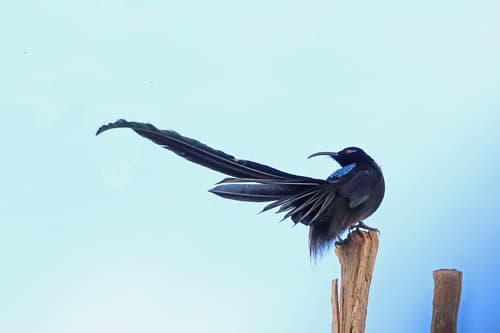
Plumage DetailsMales are velvety black with iridescent blue-green and bronze sheens on the head and back, and a small patch of iridescent blue-green on the breast/flanks. They possess striking red eyes and an exceptionally long, graduated tail of stiff, curved feathers. Females are duller brown.
Vocalization / CallVocalizations include loud, far-carrying, repetitive 'wock-wock-wock' notes, often ending in a drawn-out whistle or growl. They also produce a distinctive 'machine-gun' like rattling sound.
Primary Dietomnivore
Primary Habitatsforest, mountain
Conservation Statusnear-threatened
Geographic RangeEndemic to the montane rainforests of New Guinea, found at elevations typically between 1,800 and 3,000 meters.
Identifying Featuresextremely long, decurved black bill, exceptionally long, graduated black tail feathers, iridescent black plumage with blue-green highlights, red eyes
Description
The Black Sicklebill is a large bird-of-paradise known for its extremely long, decurved bill and exceptionally long, graduated tail. Males display iridescent black plumage with striking blue-green highlights and engage in elaborate courtship rituals in montane forests.