Beach Stone-curlew
NameBeach Stone-curlew
Common NameBeach Stone-curlew
Scientific NameEsacus magnirostris
FamilyBurhinidae
Wingspan (cm)105
Length (cm)57
Weight (g)1000
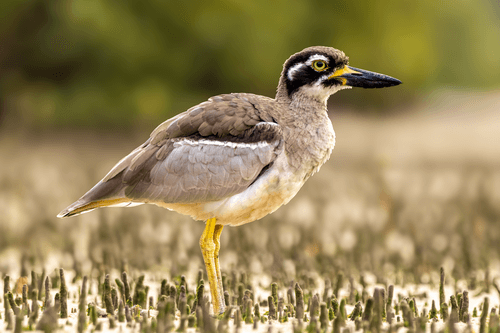
Plumage DetailsUpperparts are sandy brown, contrasting with pale grey underparts and a prominent white stripe on the wing. The head features a distinctive pattern of black, white, and brown markings, a bright yellow eye, and a large, heavy black bill with a yellow base.
Vocalization / CallKnown for its loud, wailing, and mournful calls, often given at night, which can be heard over long distances.
Primary Dietcarnivore
Primary Habitatscoastal, wetland
Conservation Statusnear-threatened
Geographic RangeFound along the coasts of Southeast Asia and Australasia, from the Andaman Islands and Malaysia through Indonesia, Papua New Guinea, and northern Australia to New Caledonia.
Identifying FeaturesLarge size, Heavy, two-toned bill (black with yellow base), Distinctive black, white, and brown facial pattern, Bright yellow eye, Long yellow legs, Coastal habitat preference
Description
The Beach Stone-curlew is a large, long-legged shorebird characterized by its heavy bill and striking head pattern. It is typically found foraging along sandy beaches, mudflats, and mangrove edges in tropical coastal regions.