Baltimore Oriole
NameBaltimore Oriole
Common NameBaltimore Oriole
Scientific NameIcterus galbula
FamilyIcteridae
Wingspan (cm)26.5
Length (cm)19.5
Weight (g)35
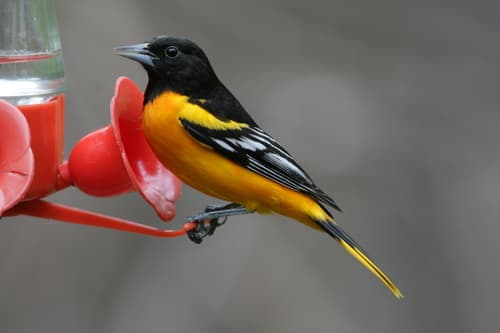
Plumage DetailsAdult males have a brilliant flame-orange breast, belly, rump, and shoulder patches, contrasting sharply with a solid black head, back, and wings. The wings feature a prominent white wing bar and white edging. The tail is black with an orange tip. Females and immatures are duller, typically yellowish-orange with an olive-brown back and less distinct wing markings.
Vocalization / CallTheir song is a series of rich, flute-like whistles, often described as a clear, deliberate 'here, here, look up, here, right here'. They also produce a sharp, chattering call.
Primary Dietomnivore
Primary Habitatsdeciduous forest, open woodlands, forest edges, parks, suburban areas
Conservation Statusleast-concern
Geographic RangeBreeds across eastern North America, from southern Canada to the southeastern United States. Winters in Central and South America, primarily from southern Mexico to northern Colombia and Venezuela.
Identifying FeaturesBright orange (male) or yellowish-orange (female) underparts, Black head and back (male), Prominent white wing bars on black wings, Pointed, straight bill, Flute-like whistling song
Description
The Baltimore Oriole is a medium-sized songbird known for its striking orange and black plumage in males. These active birds forage in trees for insects and fruit, often seen gracefully hopping among branches or visiting feeders for nectar and oranges.