ʻAkiapolaʻau
NameʻAkiapolaʻau
Common NameʻAkiapolaʻau
Scientific NameHemignathus wilsoni
FamilyFringillidae
Wingspan (cm)22.5
Length (cm)14
Weight (g)24
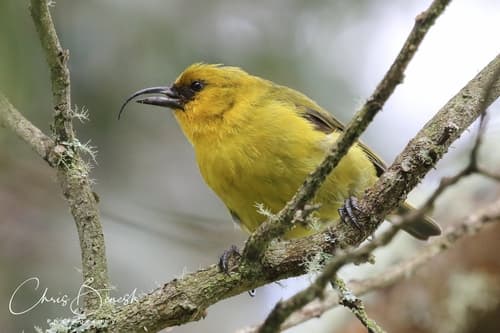
Plumage DetailsAdult males have bright yellow heads, underparts, and rump, with olive-green upperparts and wings, and a distinct dark lore/face mask. Females are duller, predominantly olive-green with less yellow. Juveniles resemble females.
Vocalization / CallIts song is a series of clear, whistled notes, often described as 'tew-tew-tew-tew'. Calls include a sharp 'chip' or 'chup' sound.
Primary Dietinsectivore
Primary Habitatsforest
Conservation Statusendangered
Geographic RangeEndemic to the island of Hawaiʻi, found in fragmented populations within high-elevation native wet and mesic forests, primarily dominated by koa and ʻōhiʻa trees.
Identifying FeaturesHighly specialized asymmetrical bill (long, decurved upper mandible; short, straight lower mandible), Bright yellow plumage (males), Dark face mask, Unique foraging behavior (chiseling bark, probing for insects)
Description
The ʻAkiapolaʻau is a unique Hawaiian honeycreeper known for its highly specialized bill, with a long, decurved upper mandible and a short, straight lower mandible. Males are bright yellow, while females are duller olive-green. This bird forages for insects in native forests, using its bill to chisel bark and probe for prey.