ʻAkekeʻe
NameʻAkekeʻe
Common NameʻAkekeʻe
Scientific NameLoxops caeruleirostris
FamilyFringillidae
Wingspan (cm)17
Length (cm)11
Weight (g)14.5
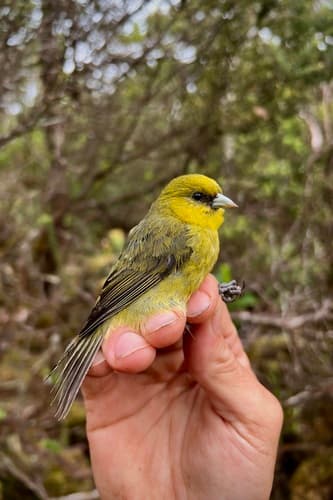
Plumage DetailsAdult males are bright yellow on the head, breast, and belly, with an olive-green back and wings, and a prominent black mask through the eye. Females and juveniles, like the bird pictured, are duller, more olive-green overall with yellowish underparts and a less distinct black mask.
Vocalization / CallVocalizations include a distinctive 'cheet' or 'tew-eet' call, often given while foraging. They also produce a trilling song.
Primary Dietinsectivore
Primary Habitatsforest, mountain
Conservation Statuscritically-endangered
Geographic RangeThe ʻAkekeʻe is endemic to the island of Kauaʻi, Hawaiʻi, where it is restricted to high-elevation native wet forests, primarily above 1,000 meters (3,300 feet).
Identifying FeaturesDistinctive crossed bill, Small size (approx. 11 cm), Bright yellow (males) or olive-yellow (females/juveniles) plumage, Black mask through the eye (more prominent in males), Active foraging behavior in forest canopy
Description
The ʻAkekeʻe is a small, active Hawaiian honeycreeper endemic to Kauaʻi, known for its distinctive crossed bill used for prying open buds and bark. Males are bright yellow, while females and juveniles are duller olive-yellow, often seen foraging in the canopy of native montane forests.